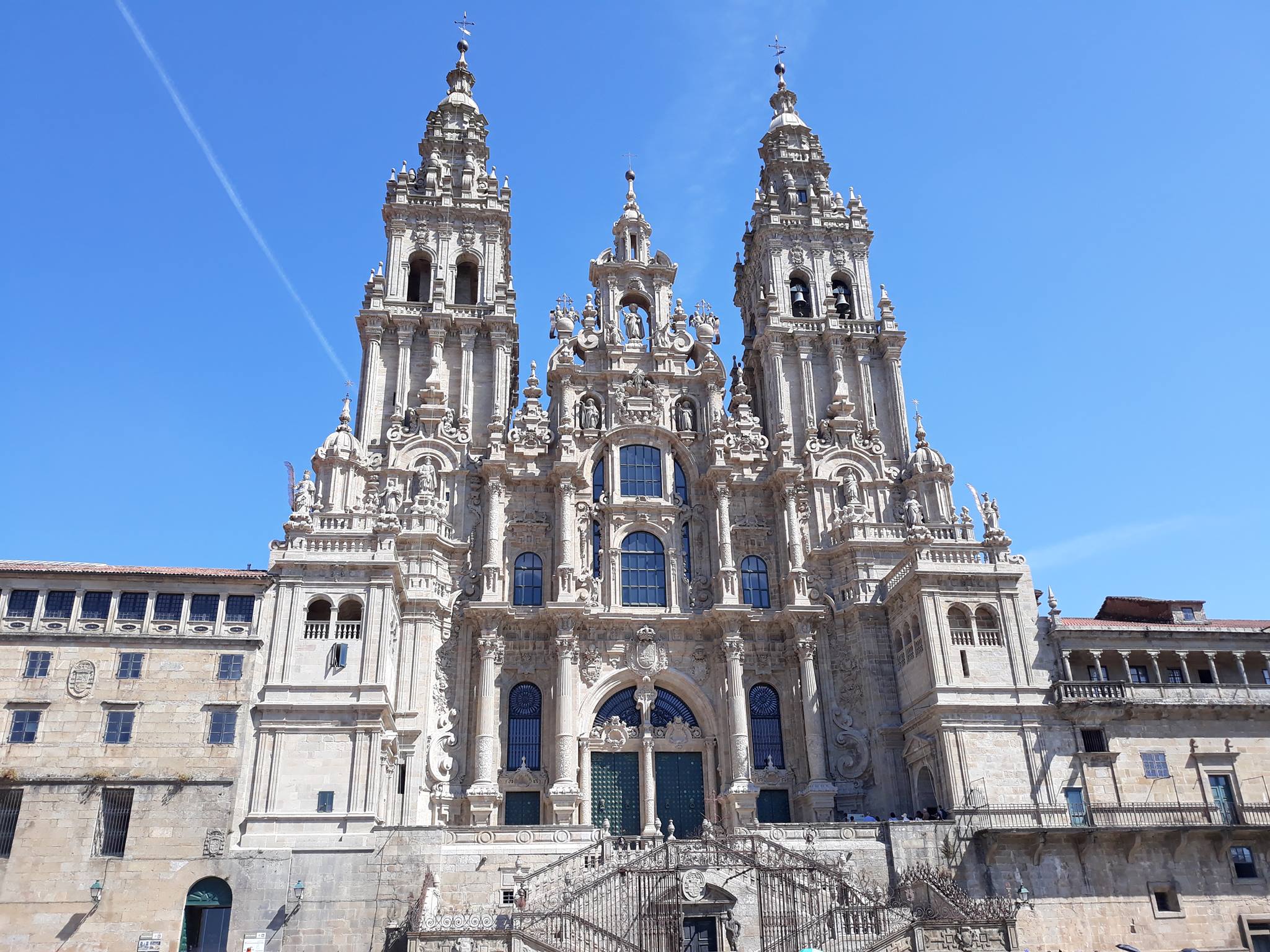
Stage 17 – Castrojeriz to Boadilla del Camino.
The Walk
There is a documentary, called Phil’s Camino, about a man who was too ill to travel to Spain to walk the Camino. Instead, he created a path on his property in Washington State to “walk” the Camino at home. People would join him to walk each day – as if they were walking a stage of the Camino. Phil journaled his walks but stopped writing down the names of those who walked with him. He reasoned that it wasn’t important to journal their names because every day he walked the Camino with all who walked before him, and all who walked after him.
Even those who do not experience the spirituality of the Camino feel this connection to other walkers – we call it the “Community of the Camino.” On this day, when I walked from Castrojeriz to Boadilla del Camino, I felt the community with other walkers.
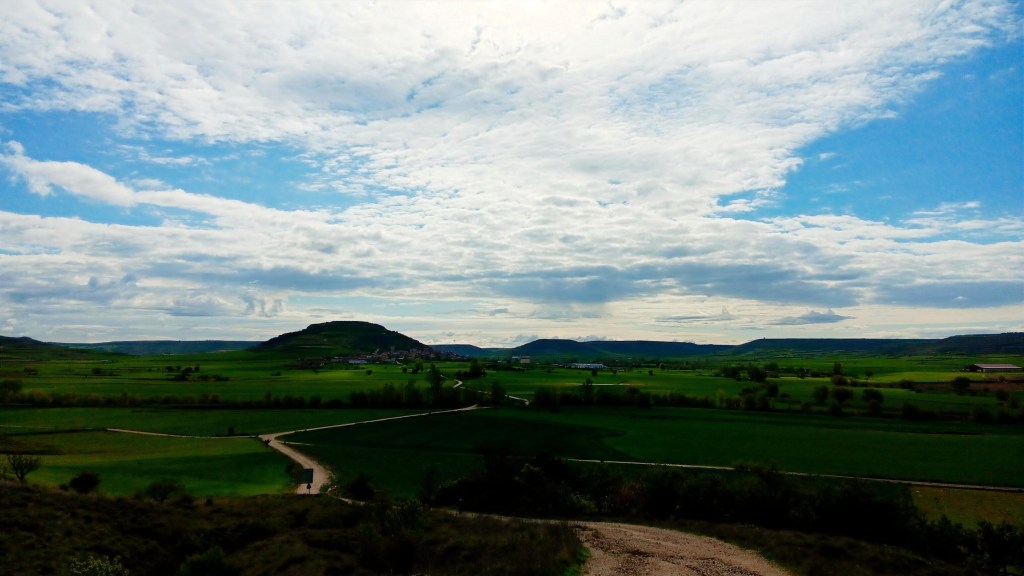
The day began in Castrojeriz. The first part of the walk is a steep climb – up the Alto de Mostalares. Being able to do that climb first thing in the morning is a good reason for staying the night in Castrojeriz. Reaching the top of Mostalares, I had a beautiful view of the Meseta. After my big climb over Mostalares, I stopped at the Ermita de San Nicolás. It is a beautiful small chapel that also operates as a municipal Albergue. If you are able to spend the night, they have a communal pilgrim dinner. They also model Jesus’ washing of feet, either before or after dinner. The Ermita de San Nicolás is a warm and welcoming stop along the Camino. Remember to get a stamp when you stop.
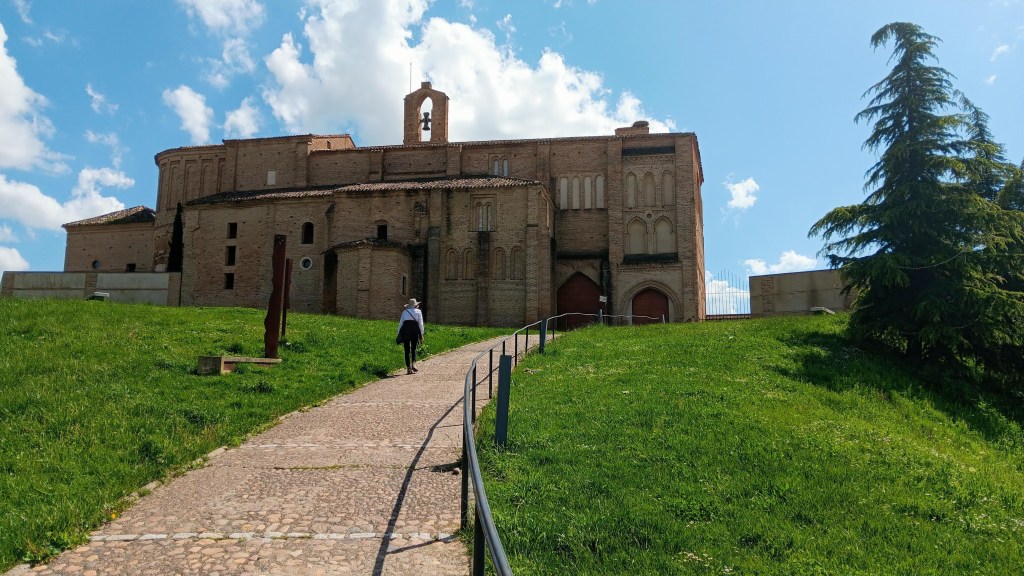
After San Nicolás, there aren’t any good stops until the end of the day. We ended our day in Boadilla del Camino. In Boadilla del Camino, there is a church and a gothic monument to the town´s independence (Rollo de la Justicia). The real experience, however, was staying at En Camino. En Camino is both a hotel and a hostel. It creates a space where everyone walking the Camino can share fellowship. The pilgrim meal is the best example. We ate with young and old, people from both eastern and western Europe, those walking as pilgrims and those walking as tourists. At our table, was a woman celebrating her 75th birthday, a woman celebrating her 50th birthday, and a woman celebrating her 25th birthday. Everyone had a different background and different life experiences. We were joined, however, by the experience of the Camino. It was the Community of the Camino.
Hospitality and the Catholic Church
Sometimes we forget that a core value of Christianity is hospitality – giving and receiving “welcome.” So many people do not feel welcomed within the Catholic Church. Although the feeling is unmistakable when it is absent, knowing what true “welcome” feels like is elusive. Esther de Waal in her commentary on the Rule of St. Benedict, A Life Giving Way, describes what I think “welcome” should look like – something we all want through our faith:
My most profound desire is to be at home, in all the senses that I understand it, home in my own inner self, at home in the place to which I belong, at home in the family of the Church. I long to be able to answer, from the depths of my being, “Here I am.” 1
This feeling of “home” is how I define the welcome I am looking for from the Church. It is the ability to say, “Here I am,” and the ability to be accepted for who I am.
We are all pilgrims. The Catholic Church is a pilgrim church – we believe all are called to salvation in community as one People of God.2 Embracing this idea of “church” where all are called to salvation, requires the Catholic Church to embrace each person’s uniqueness. Although I think many in the Church are trying, creating an environment of welcome for diverse communities requires more than coffee and donuts after mass. Specifically, creating an environment of welcome means seeing each person as unique and respecting their faith journey, even if you do not understand that journey.
Learning to Value Diverse Voices
The idea that the Church should listen to its diverse voices is something it has always struggled with. I remember being taught that the Pope had the authority to represent my experience within the Church – that I should be able to see my Catholic self in the Pope. It seemed odd that an older, white, European, conservative man had the right to represent my experience within the Church. But that was where the Church was in the early 1990s.
And then in 2021, Pope Francis began the process of transforming the Catholic Church into a synodal church – a church with a goal of seeing the uniqueness of its members and the value they bring to the Catholic faith. In his homily for the Holy Mass opening the synodal path, Pope Francis asks if the Church can reset in a way that truly embodies Jesus.3 In his homily, Pope Francis states:
The Gospels frequently show us Jesus “on a journey”; he walks alongside people and listens to the questions and concerns lurking in their hearts. He shows us that God is not found in neat and orderly places, distant from reality, but walks ever at our side. He meets us where we are, on the often rocky roads of life.4
Pope Francis further asks if the Christian Community can embody a “style” of God, who travels the paths of history and shares in the life of humanity. He says that Jesus grows his ministry through acts of encounter, listening, and discernment. Encountering people as they are and allowing the Church to be transformed by that encounter seems to be the goal of a synodal church.
I cannot say that the Church has mastered this spirit of “encounter.” I recognize that many, who do not fit the traditional mold of the Church, feel rejected by those in power. But the Church itself teaches that those who do not “fit” the mold of the Church have an equal privilege of faith within the Church.
[N]ot everyone marches along the same path, yet all are called to sanctity and have obtained an equal privilege of faith through the justice of God.5
As part of the Church, we all have both the right and obligation to model the graces of a synodal church.
The graces of a synodal church – encounter, listening, and discernment – are skills we learn as we walk within the Community of the Camino. On the Camino, we encounter those who are different, those who walk for reasons we may not understand. We listen to the stories of the other pilgrims, giving them the space to discern their own path forward – and learning about ourselves in the process. We receive each other as Christ.6 We listen with the ear of our hearts.7 We can only hope that as more people model this within the Church, the Church will reach its goal of creating a true welcome for all of its members.
- Esther de Waal, A Life-Giving Way: A Commentary on the Rule of St. Benedict (Collegeville, MN: Liturgical Press, 1995) 7. ↩︎
- “Lumen Gentium,” Vatican Council II: The Conciliar and Postconciliar Documents (General Editor: Austin Flannery, OP, Collegeville, MN: Liturgical Press 2014) paragraph 13-14, 364-365. ↩︎
- Pope Francis, Homily of his Holiness Pope Francis, St Peter’s Basilica
Sunday, IO October 2021. https://www.vatican.va/content/francesco/en/homilies/2021/documents/20211010-omelia-sinodo-vescovi.html ↩︎ - Ibid. ↩︎
- “Lumen Gentium,” paragraph 32, 389. ↩︎
- See Rule of St. Benedict, 53: 1-2. ↩︎
- See Rule of St. Benedict, Prol.: 1. ↩︎



Leave a Reply