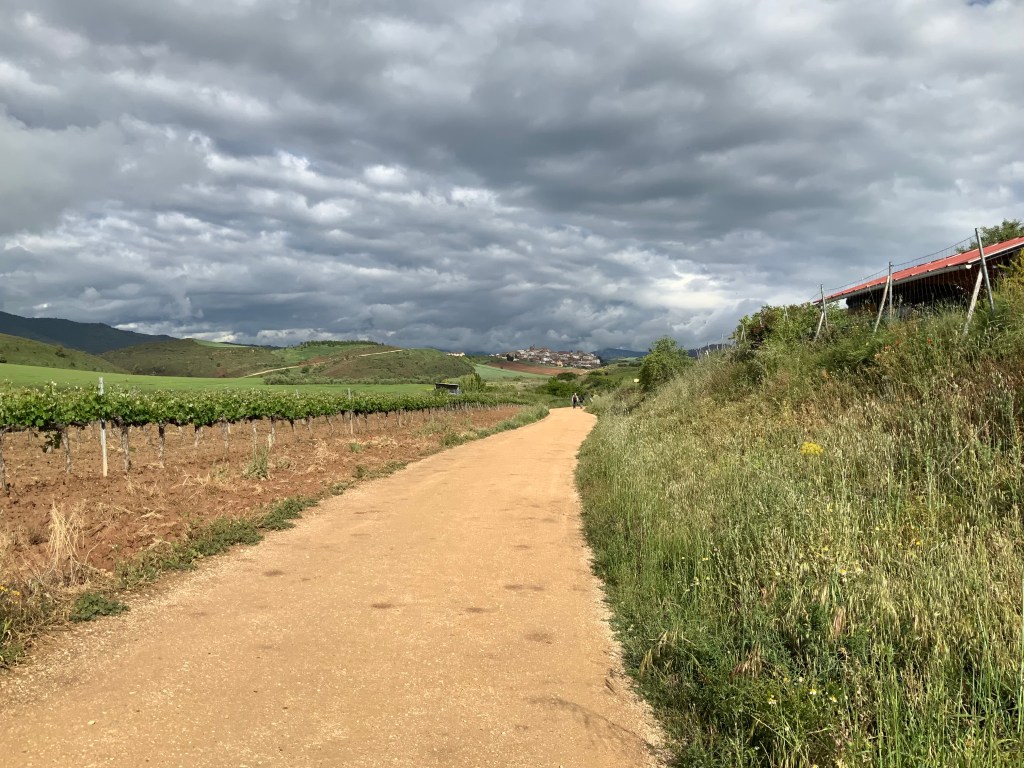
Puente La Reina to Estella – Walking among the Vineyards.
Learning to Reflect God
At this point in our pilgrimage, we have learned to reimagine the face of God. We experience God as our earth, centering and life-giving. We understand that God moves at his/her own pace and have learned to wait patiently, with hope, for the presence of God in our lives. Now, our focus changes to learning to reflect God into the world.
How do we reflect God? We start by committing ourselves to the most basic of commandments:
“You shall love the Lord your God with all your heart, and with all your soul, and with all your mind, and with all your strength.”
“You shall love your neighbor as yourself.” 1
We start our walk among the vineyards with the understanding that we worship God by reflecting God’s love to our neighbor. So many people profess to love God and yet they reject those who are different, those who are poor, and those who live within the margins. The only way to read this month’s post is to understand its basic theme: You cannot say you love God unless you love your neighbor – both in thought and in deed.
Walking among the Vineyards
The walk from Puente La Reina to Estella is perfect for today’s contemplation because it is a walk among vineyards. In the books of the Hebrew prophets, the vineyard is a symbol of a community that God loved and cherished, but was ultimately unfaithful to God’s teachings.
In First Isaiah, Isaiah sings a song about the Lord’s vineyard. He sings about how the Lord cared for the vineyard and expected it to yield grapes. The vineyard, however, yielded wild grapes. As a result, the Lord allowed the vineyard to be devoured, to be trampled down.2
What did the community do to that was a sin against God? They did not do justice – they did not show mercy:
For the vineyard of the Lord of hosts
    is the house of Israel,
and the people of Judah
    are his pleasant planting;
he expected justice,
    but saw bloodshed;
righteousness,
    but heard a cry!3
The Hebrew prophets preached so that the people could make sense of their historical reality. Specifically, the Jewish people were confronted with the rise of empires to the north that were powerful enough to destroy them. First Isaiah writes of the destruction of the northern kingdom of Israel. Other prophets spoke of the destruction of Judah by Babylon and the forced migration of the Jewish people. Our God is the God of history. We experience God by seeing how he/she has been present in history to bring all nations to salvation.
I am the Lord, I have called you in righteousness,
    I have taken you by the hand and kept you;
I have given you as a covenant to the people,
    a light to the nations,
    to open the eyes that are blind,
to bring out the prisoners from the dungeon,
    from the prison those who sit in darkness.
I am the Lord, that is my name;
    my glory I give to no other,
    nor my praise to idols.4
This is Our Moment
As I write, my friends and I are contemplating what it means that the majority of Americans accepted the racist, misogynistic, and anti-democratic vision of Donald Trump – or at least were apathetic to it. We are also preparing for more of the ugliness and chaos that surrounded his first administration.
Evangelicals interpret “God” for us and try to tell us that Donald Trump was anointed to create their vision of America. Donald Trump seems to believe this also. I will say that anyone who says that they speak for God is guilty of the original sin of humanity – the desire to be God.5 Sin does not crucify the person who sins, it crucifies those who are too weak to fight back. Like the vineyard in First Isaiah, sin corrupts the society until God no longer recognizes us as his/her own.
No one knows what God intends. We just know that God is present in history. Our job is to meet God in each moment that the future brings and make the choices we need to make to live the covenant of the Gospels.
God is here – but we will not find him/her with the powerful. The Gospel of Matthew instructs us where to look for God in our world:
[F]or I was hungry and you gave me food, I was thirsty and you gave me something to drink, I was a stranger and you welcomed me, I was naked and you gave me clothing, I was sick and you took care of me, I was in prison and you visited me.6

God is present in the poor, the oppressed, and those who are marginalized by our society. They are our neighbors. If we want to love God with all of our hearts, all of our souls, we must make choices that honor them.  We cannot love God unless we love our neighbor.
Finally, we are called to engage in true worship. History unfolds as God intends – our job is to meet the moment in the spirit of true worship. Worship is not judgment. True worship is doing justice, loving kindness, and walking humbly with God.7
This is our moment to stand up, and to reflect the goodness of God into the world.

 Pilgrimage: A Journey of Transformation
Leave a comment