Stage 14. Burgos to Tarjados.
The Walk.
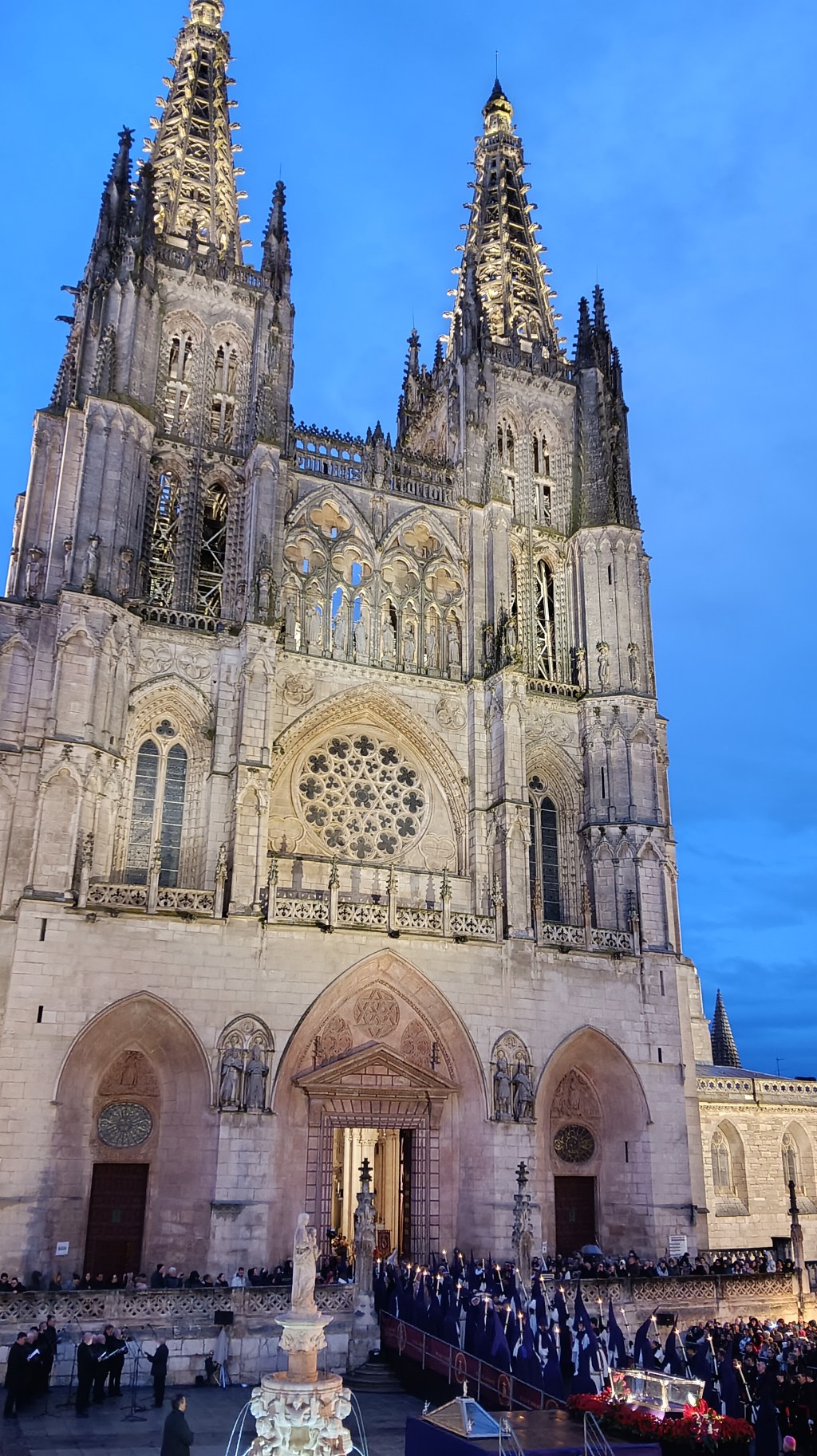
I have a love/hate relationship with Burgos. The Cathedral is beautiful – it is a world heritage site. The Museum of Human Evolution is also worth a visit. It describes the discoveries being made at the archaeological site of Atapuerca. On the other hand, it is difficult to find places to eat on a pilgrim’s schedule. The hotels will give you a map of where the traditional Spanish restaurants are located. But for most restaurants in Burgos, the kitchen does not open until 8:00 pm and you need to make reservations. If I stayed in Burgos again, I would stick to the pizza or burger restaurants. Their kitchens are generally open all day and you do not need reservations. We had good luck at Pizza Station the day we arrived in Burgos.
The next day (a rest day), we had problems finding places to eat dinner. We finally found a place where we did not need a reservation, and they would seat us a little before 8 pm. Unfortunately, the food was not very good, and I did not feel well the next day. Because of this, on Easter Sunday, I left the hotel at noon and could only walk to Tarjados.
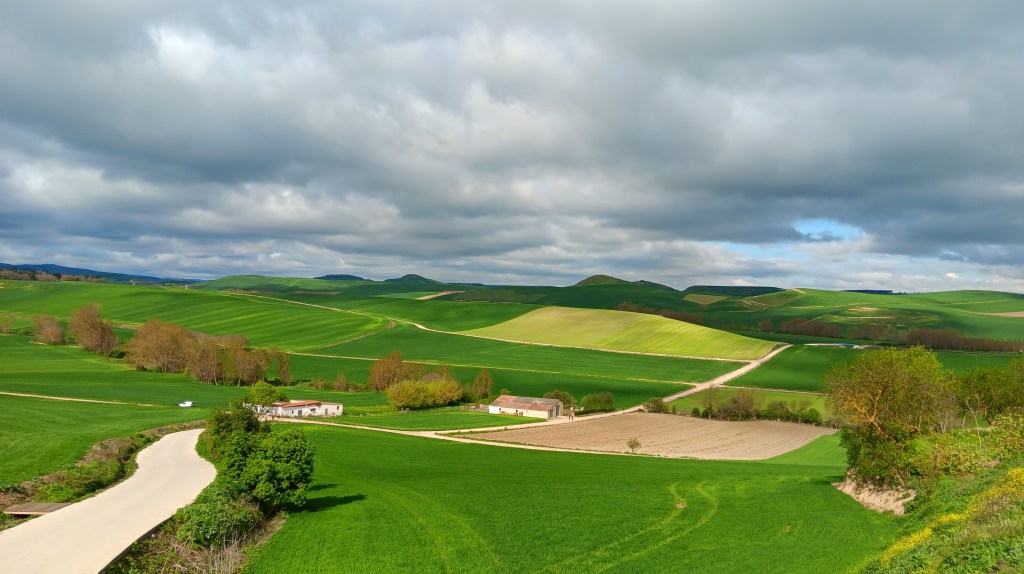
Being able to stop in Tarjados was a blessing. We stayed at La Casa de Beli. The owner was kind, the rooms were nice, and the food was excellent. In future walks, I might walk through Burgos and stay in Tarjados. It felt like a better pilgrim experience
Easter Sunday – He is Risen.
There is an Ignatius way of praying where you imagine yourself within the Bible story. On Easter, we imagine ourselves waiting for dawn the day after the Jewish Sabbath. We take the time to experience the darkness of the night. We wait for the first glimpse of light to appear in the eastern sky. Like the women disciples, we walk to the tomb, carrying spices to anoint the body of our Lord.1 When we arrive at the tomb, we see the stone rolled away. When we enter, the body is not there.2 What do we feel? We take time to imagine what those women felt when they saw the empty tomb.
In the Gospel of John, Mary Magdala feels sad. She weeps outside of the tomb. Angels ask her why she is weeping. She replies: “They have taken my Lord, and I don’t know where they laid him.”3 You can feel her anguish. Someone she loved has been killed. The body has been taken. There is nothing left of her Lord.
We also imagine her despair over the loss of the world that she believed Jesus was creating through his ministry. Jesus healed those who were sick and preached the good news that the kingdom of heaven is at hand.4 In the kingdom of heaven, the poor, the hungry, and those who mourn are cared for.5 It is likely that the disciples saw the end of Jesus’ ministry in his crucifixion and death. Thus, we have to imagine Mary Magdala mourning the loss of a better world.
But, on Easter Sunday, death is not the final word. Jesus appears to Mary Magdala and asks her why she is weeping. Mary does not recognize Jesus – she believes him to be the gardener.6 Only when Jesus says her name – “Mary” – does she recognize him. Mary Magdala tells the disciples that she has seen the Lord.7
There is a newness at sunrise on Easter Sunday. Jesus is risen. We feel it in the quiet of the morning – the world is renewed. And yet, as the day comes into focus, we see that people are still hungry, thirsty, unclothed and unwelcomed. The powerful still oppress the weak, and the weak are still suffering and dying. We put ourselves in the place of Mary Magdala, mourning the loss of a better world.
We might despair that we continue to live in a world where violence overrules peace, the poor continue to be hungry and unhoused, the weak are at the mercy of the powerful, and the powerful have no mercy. But we remember that Mary’s story does not end with her discovery of the empty tomb. Mary encounters Jesus.
As I walk, I spend time with the empty tomb. I see the tomb in a beautiful garden, with Jesus as the gardener. My thoughts bring me back to the walk in the forest between Roncesvalles and Zubiri. I remember the feeling of God as the earth. I remember how God’s rain nourished the trees. Listening to the birds sing, I felt that the trees were filled with life. On Easter Sunday, life is reflected back into the world through the risen Christ. Like Mary Magdala, we experience hope in the garden.

 Pilgrimage: A Journey of Transformation
Leave a comment